




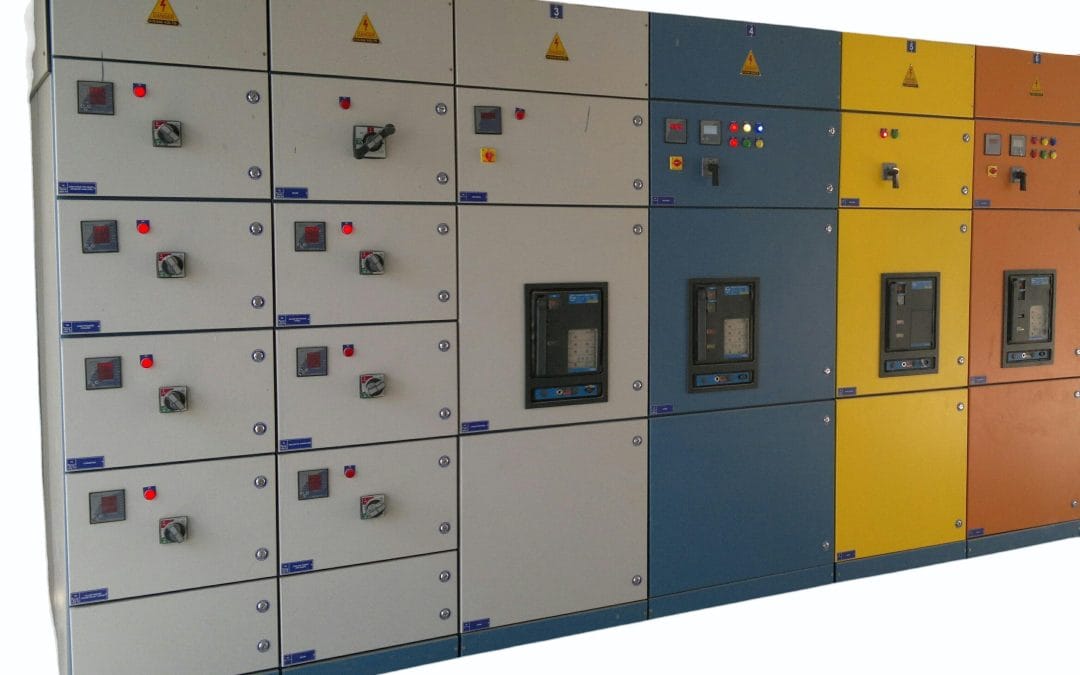
A wrong PCC Panel specification doesn’t just cost money — it costs uptime, safety, and in mission-critical projects, it can cost lives. Here’s how to get it right.
Whether you’re powering a steel plant, a metro rail network, a data centre, or a large commercial complex, your Power Control Centre (PCC) Panel is the backbone of your entire electrical distribution system. It controls what gets power, how much, and when. Get it wrong and you’re facing tripping, overheating, downtime, or worse — safety hazards that shut entire projects down.
At Super Elmech, we’ve been designing and manufacturing CPRI-certified PCC Panels since 1989 — for clients like Indian Oil, NTPC, NHPC, and the Indian Army. This guide captures what we’ve learned about selecting the right panel for demanding projects.
1. Start With a Rigorous Load Analysis
Before a single component is specified, you need complete clarity on your load profile. Many projects fail at this step because they plan only for today’s load, not tomorrow’s.
- Total connected load and maximum demand
- Diversity and demand factors
- Short-circuit withstand requirements
- Future expansion — additional feeders and busbar headroom
Pro tip: Super Elmech’s PCC Panels are designed with current carrying capacity up to 6300A — built to grow with your project, not be replaced by it.
2. Compliance Is Non-Negotiable
In large infrastructure projects — airports, metro systems, hospitals, refineries — your PCC Panel must clear regulatory hurdles. Panels that aren’t properly certified can fail inspections, delay commissioning, and expose your project to liability.
- IS/IEC standard compliance
- CPRI type testing for short-circuit withstand strength
- IP protection level (IP65 for harsh environments)
- Temperature rise testing under full load
All Super Elmech panels are CPRI type tested and carry ISO 9001 certification — meaning every panel ships with traceability and documentation that satisfies even the most demanding project inspectors.
3. Evaluate Build Quality Component by Component
A PCC Panel is only as reliable as its weakest component. In industrial environments with vibration, heat, humidity, and dust — inferior components degrade quickly and fail unpredictably.
- High-grade copper or aluminium busbars (not scrap-grade material)
- Reliable ACBs and MCCBs from reputed brands
- Proper insulation and creepage distances
- Enclosure thickness (1.6mm–2mm CRCA steel minimum)
- Powder-coated finish for corrosion resistance
- Structured internal cable management
All fabrication, assembly, and wiring at Super Elmech is done in-house at our Gurugram manufacturing facility — giving us complete control over quality at every stage.
4. Safety Features: What to Look For
At the scale of large industrial installations, a single safety failure can cascade into a shutdown that costs crores per hour. Your PCC Panel should be engineered to isolate faults instantly and protect both equipment and personnel.
- Properly designed earthing and bonding systems
- Overload, short-circuit, and ground fault protection
- Arc flash mitigation design
- Interlocking systems to prevent accidental operation
- Clear labelling and colour-coded wiring for safe maintenance
Each Super Elmech panel undergoes high-voltage testing, Meggar testing, switchgear testing, and primary/secondary current injection tests before dispatch — safety is verified, not assumed.
5. Customisation for Your Specific Project
No two large projects have the same electrical architecture. A generic panel is almost never the right answer. When evaluating manufacturers, ask what level of customisation is available:
- Integrated metering and power monitoring
- PLC integration for automation
- SCADA and BMS compatibility
- Remote operation and monitoring capability
- Energy management modules for sustainability targets
Every Super Elmech panel begins with a custom AutoCAD design — including G.A. Sketch, Single Line Diagram (SLD), and Control Drawings — reviewed and approved before fabrication begins.
6. Plan for Maintenance From Day One
A PCC Panel that’s difficult to maintain is a liability. Especially in continuous-process industries like steel, cement, or chemicals — where downtime carries enormous costs — ease of maintenance directly affects operational ROI.
- Front and rear accessibility for all major components
- Modular draw-out design for quick feeder replacement
- Clear component labelling and wiring diagrams
- Space for future feeders without full panel redesign
Super Elmech’s Draw-Out Panel range is specifically designed for plants where machines cannot be shut down for maintenance — feeders can be swapped without touching the rest of the distribution system.
7. Choose a Manufacturer, Not Just a Supplier
The best specification in the world fails if execution is poor. When evaluating vendors, go beyond the product brochure:
- Do they manufacture in-house or outsource?
- Can they show actual CPRI test certificates (not just claims)?
- Do they have experience with projects at your scale and sector?
- What does after-sales support look like — genuinely?
- Will they visit your site before design begins?
Frequently Asked Questions
PCC Panels are typically designed for current ratings from 800A to 6300A. Super Elmech manufactures panels up to 6300A to serve the most demanding industrial and infrastructure applications.
A PCC (Power Control Centre) receives power from the transformer or HT source and distributes it to MCC panels, transformers, and large HT motors. An MCC (Motor Control Centre) handles the next tier — distributing power to individual motors and equipment. They typically work together in large installations.
At minimum, look for CPRI type test certification covering short-circuit withstand strength, temperature rise limits, and IP protection rating. ISO 9001 certification of the manufacturer is also an important quality indicator.
Lead times vary based on complexity and customisation, but typically range from 4 to 12 weeks for large custom panels. Early engagement with the manufacturer during project design phase is the best way to avoid delays.
Ready to Specify the Right PCC Panel?
Super Elmech Engineers has been delivering CPRI-certified, ISO-quality electrical panels for large industrial and infrastructure projects across India since 1989. Our panels are trusted by Indian Oil, NTPC, NHPC, JSW, BHEL, the Indian Army, and 100+ other organisations.
We begin every engagement with a free pre-site consultation — understanding your project’s load requirements, environment, and future needs before recommending a solution.
Contact us: +91 9643824159 | [email protected] | www.superelmech.com